Showing posts with label 027 gauge. Show all posts

Thursday, May 23, 2019

Collecting and Running Old Lionel Post War Trains

Ultimate Lionel Layout 1950's

It's been some time since I updated this blog. I recently posted a short video on the Instagram feed for My eBay Store     It is a video of one of my old O27 Gauge postwar steam engines zipping along on my train layout(s). 


A far shortened version of the above video has drawn a good response, with people asking for more such posts. The conclusion, a lot of folks seem to love old toy trains.
There are a few aspects to collecting old toy trains, especially old toy trains. Most people who collect toy trains also like to run them but therein lies the quandary. Preserving the value of a collectible vs running it and wearing down its collectible value.


Playing with old trains 


For this post - Lets focus on running the old trains. While they are cool, the older trains are quite antiquated in their features and operation. They last longer in terms of running, but they have their limitations compared to the newer toy trains. Honestly, it takes huge amount of patience as they can be frustrating to operate and run. After all they are 60 to 70 year old toys!

If you decide to run your old trains on the original style tracks you will face certain limitations too, such as limited availability of new replacement O-gauge and O27-gauge 3 rail tracks.  

The O-gauge trains run best on the O-gauge Track and need larger radius curves.  The O27 track is lower profile and can have a tighter turn. You can tell the difference in the trains scale as the O-gauge versions of the Locomotives, the engines and cars have THREE Number designations while the O-gauge have FOUR numbers.  

O27 is a gauge of its own and was very popular with the old Lionel "postwar"  trains. Below is an O27  "2020".   The photo below that shows the O-gauge version, the 671.


Lionel O27 gauge 2020

Lionel O gauge 671


Keeping the layouts simple is often best with the older postwar trains. A lot of them don't work well over switches ( turnouts) either. Here are some basic layout ideas from the original Lionel manuals.


For an old train runner, you probably don't want to give a child the old train as a runner, you are better off buying a new or newer set which are designed for better and easier play for kids. 


Newer Lionel Pennsy Flyer w Lionel Chief remote control

If you plan on running the old trains, you probably don't want or need ones that are in the top grade of the collectors scale. The very good C6 grade probably works best for operational runners although I still gently run my C7 and C8 grade trains.  Here is a brief breakdown of grading from C6 and higher:

C6 Very good: Minor scratches and paint nicks, minor spots of surface rust, free of dents, may have minor parts replaced.

C7 Excellent: Minute scratches and paint nicks, no rust, no missing parts, no distortion of component parts. 

C8 Like New: Complete and all original: No rust, no missing parts, may show affects of being on display and/or age, may have been run. 

C9 Factory New or Brand New: All original, unused, may evidence factory rubs and the slightest evidence of handling, shipping and having been test run at the factory. (Lionel test ran every engine they shipped!)

C10 Mint-Brand New: All original, unused and unblemished. (C-10 is non-existent unless the item is in a sealed unopened box)

The Original Boxes can also be a key factor for a collectible. Sometimes the original box itself can be worth more than the original contents.

Track Layout wise, anything larger than a single basic loop that is 8' or 9' by 4' or 5' wide will need additional power taps from the basic transformer such as a cw80. 

Basic Wiring from cw80 to a small basic loop
Back of cw 80 Transformer

More lockons or solder wires to the track will be needed to properly power farther points on larger loops:


I would suggest to start smaller and simpler, then work up to larger layouts. Perhaps start with two separate loops with independent power, one inside the other.  Having at least two trains running at the same time on the layout is more fun and looks better. Make sure you have the space so you don't have to keep tearing it all down, as even the smallest O27 or O gauge layout still needs a good deal of space. 

Curve and height differences for O gauge & O27 

An 8' x 4' table or more realistically a 10' x 6' is best for a decent smaller O27-gauge or O-gauge layout. If possible, avoid using the smallest of the curves like the O27 - 27"curve. Instead, use 31" or 36" inch curves at minimum, because you will be able to run more trains with more cars. On the smaller 27" curves, you will only be able to use a limited range of engines which can only pulling a small number of cars around such tight turns. The larger radius curve track provide more choices and fun too. 

More details on scale and other items regarding getting old trains to run can be found within our blog archives. 

As demand and interest warrants, with time permitting, I will publish more articles on this whole subject. 

You can also check out and visit my eBay store of various items by -

click this link to visit my store 


Note: We currently do not have a large inventory of 1940s - 1950s Lionel as these items sell out fast and it is getting harder to find and source good quality Postwar Lionel items, and I have a very hard time parting with any I  find. 

Happy Railroading and shopping!


Wednesday, December 14, 2016

Bringing Old Trains Back to Life for Christmas - Part 2


A practical alternative to setting up your prized family heirloom postwar trains would be to just keep the older trains for display or just for yourself and buy one of the NEW Ready to run sets from Lionel.   

OR You can set up both - an old and a new display. Why not? Just set up two separate loops.

 There are cooler features in the newer Lionel ready to run sets which younger train fans will enjoy. Others around you will not have the same emotional attachment to your old trains. You will also enjoy the cooler new features of the newer trains. 

Let me preface by stating, I am not a paid endorser of Lionel directly or indirectly.  I am not a paid endorser of any train makers or toy train dealers that may be mentioned in this blog.

 
There are some excellent choices in regards to the new ready to run sets, but I will focus on one. For about $200 or even less, you can have a NEW fully ready to run O Gauge set with an oval of track, a metal bodied locomotive with smoke, lights and sounds, four or five freight cars, an engineer figure in the cab, all of which will work works by a simple to use remote control. The Lionel Chief remote IS included. 


These newer trains will also work on your older / existing layout. Speaking as a toy train enthusiast, operator and collector for more than 40 years, in my experienced opinion, if you are a steam locomotive era fan, one of the best choices is the Pennsylvania Flyer Lionel Chief ready to run. 


The Lionel Pennsylvania Flyer LionChief locomotive is sturdy.  The train set includes the locomotive, the coal tender, a boxcar, a tanker and caboose. It would be nice if the caboose was lighted too. Each car has die-cast metal trucks with operating couplers. ( operating track section needed and sold separately)

The train also features metal handrails and ladders on many of the cars. There is a great deal of attention to detail which has always been a hallmark of Lionel trains.
The detail and craftsmanship on the locomotive and all the train cars is sharp. 

Depending on the variation, the locomotive is all black with a matte-gray front.  Some are a dark “Brunswick” green. The cabin number for the train we have is number 421 and stamped in gold. The bell and whistles on top of the locomotive are gold colored. The locomotive body is metal. 

You can add additional train cars to this set and the locomotive's should be able to pull quite a few of them. I have put as many as 14 and the locomotive pulled them without issue.  The track setup becomes the limiting factor before the locomotive. Most trains will pull much longer trains but you will need to expand beyond the basic track kit and use much larger ( less sharp ) curves which also means more space.

Features

The tender connects to the locomotive, and the tender powers the speaker on the bottom of the tender. To activate the speaker, you need to make sure the switch is on.
When in the on position with the tender connected, the flyer makes a variety of different sounds. When the train is sitting idle on the tracks, the speaker issues a rumbling noise of the locomotive staying idle. The sound created when the train is in motion will cause enjoyment for all. The sounds of the running locomotive are fantastic. It has a deep tone that starts gradually builds up to a fully puffing steam engine, like a real steam train.


The Locomotive has a whistle, announcements and bell noises that are all controlled with the remote.  If you go to the link to Lionel below, they have a demo of these sounds you can play. 

Here is the link -->   Click here to go to lionel.com

A key feature of Lionel Chief Sets is that without a lot of added complicated control gear, a child and a friend or two can operate multiple Lionel chief trains at same time on a the same track layout.   If you are looking to do this, it is best to setup a layout that has more than one loop and more than the basic power. ( meaning added track, more powerful transformer, some track turnout switches )

The Lionel Chief sets pair a unique remote controls matched to each locomotive, so you could combine two Lionel Chief train tracks and have two people operate two different trains on the same track while maintaining independent control over each train.

  
Lionel Lionel Chief steam sets like all Lionel O gauge and O27 gauge  can operate on just about any Lionel  3 rail O gauge track or other makers of 3 rail O gauge track. You can also use AC-powered transformers and the older 3 rail tubular tinplate track. 


Similar offerings     A very similar offering is the The Pennsylvania Railroad "Keystone Special" train set, complete with a powerful 0-8-0 steam locomotive, three freight cars, and track and power you need to get started.  The locomotive is dressed in realistic Brunswick green and equipped with the LionChief system, the locomotive is run by remote control which gives you easy access to realistic train sounds and announcements and train control at the push of a button. All cars feature the popular Pennsylvania name and markings, and an operating searchlight car is also included to add to the fun. 
 
 Either way you elect to go run the old or get some new trains, or perhaps even do both, you and your family will most certainly enjoy  your old trains and the new trains!

Below you can Check out the wide variety of items in our store. Few are train items as we tend to keep the ones we find and the ones that get listed sell quickly and are very hard to find in good condition.   

Friday, November 18, 2016

Bringing Old Trains Back to Life for Christmas - Part 1

Memory is a funny thing, you may not recall the details, but you do recall the feeling.


After setting up the Christmas tree, my mom or my uncle would bring out my uncle's Lionel Trains from their hidden slumbering place.   My first set was originally my uncle's own childhood  Lionel Steam trains from 1947 - 48 that he gave to me.   I recall the first time I saw those trains.   They were not new,  the trains were about 17 years old at that time but they were instantly one of the most fascinating things I had ever seen. They are now 70 years old, I still have most of them and have added more since that time.

If you are looking to awaken Postwar Era Lionel Trains from the 1946 - 1969 period there is a note of caution here. Today, these items are scarce in excellent condition, highly collectible and of rather high value in very good condition. In cleaning them, one can inadvertently remove the original paint, certain key details and lettering.  

Back in the 1940's and 1950's era, when Lionel wrote  the original maintenance manuals, cleaning engines and car bodies may have been as simple as they suggest. But remember, 70 years ago, Lionel trains replacements for decals and parts were readily available. Today,  the circumstances are different. Many, if not all, of Lionel engines and cars are rare collectibles to a certain extent, and as a result require extremely careful cleaning.

To awaken your own sleeping trains, you want to keep an attention
https://www.ebay.com/itm/253263904365
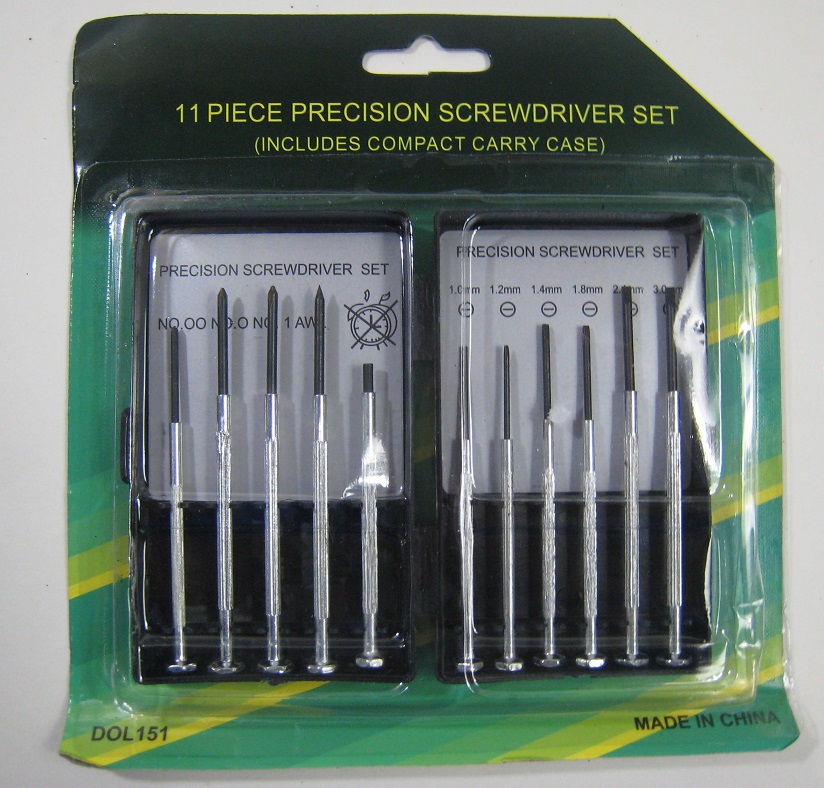
Precision Tools
to detail and exercise a lot of care and patience.  You will need regular screwdrivers and you will also need Precision Screwdrivers


Over the years I found waking the trains up to be part of the fun and excitement.  
Lionel CTC lockon


Before doing anything else, its best to put on old clothes and start with the track.  If they are Lionel, find the CTC Lockon(s).  Inspect and put aside any warped or bent track sections and those with rust. Start with the cleanest pieces of track for now, put the rest aside.  For now, we are only dealing with getting the locomotives and Engines up and running.  To do this you will need some working track and a working transformer. ( most of the rusty or broken track can be revived. I will post a separate article on fixing broken track sections)   


mlntrains Toy trains blog mlnostalgia
027 track and scotch brite
https://stores.ebay.com/mikesgeneralstoreandfinegoods/
Lionel Track Cleaning Kit
Use Scotch Brite, as even the best sections of tack that have been stored or sat a long time unused, must be wiped and cleaned. Do not to use  erasers and Do NOT use WD40,  sandpaper or steel wool to clean the track or anything else.     Make sure all the track joint pins are firm in the tracks and that the pins are clean and free of rust.

  >> TIP << you can use apple cider vinegar to dissolve and remove rust from track and track pins.     


 Use a scotch brite pad for track cleaning. Steel wool  will damage items and leave behind metal strands.   You do not want to have tiny metal strands left behind  which can cause shorts or go in to the motor and ruin the motor.   

how to fix and repair old postwar trains Do not use Erasers and WD40 as these leave behind residue that gums up everything and will eventually require the motor brushes or contact plate be replaced. Do not use these.

Some sponges have a scotch brite pad on the back of them. I prefer using those.  Follow up with Lionel track cleaner and make sure its all dry before placing any train on the track. Make sure there are no tiny bits of debris and other strands of dog hair or whatever else may be about the track.  Fibers and hairs will wind up wrapping around the wheel trucks or worse, wrap around the motor.

Make sure the middle rail or any of the rails are not shorting out by making metal to metal contact with the cross ties on the track. Sometimes the insulators on the middle rail of the older tinplate track can fail or go missing. Also make sure you are using the correct track. Often  true O gauge trains may have issues on an O27 track and require larger curves. However most 027 trains works fine on  O gauge tubular track and fastrack. 

Types of Postwar O27 Track CLICK TO ENLARGE


There were 3 types of older tubular tinplate track from Lionel. The main difference is in the height of the track and the curve. 027 was lower and made to allow tighter turns, which in turn, limited the operation of certain trains that could not operate on smaller curves. Longer train locomotives and longer trains need larger curves and these would run on O Gauge track with wider curves. Lionel produced O and 027 models of most of their trains. High Rail is a term used to describe true O gauge model railroading.This is because the O gauge track is higher in profile than the lower profile O27.

Put together a basic circle or oval of tracks to test the trains. 


Lionel Lockon in correct placement.
Make sure the Lionel CTC  lockon is correctly attached. The top clip always connects to the middle rail, the lower one to one of the outer rails. If you are into it, you can skip the lockon and solder the wires to the underside of the track instead. The Example in the photo shows the wire ends tinned with solder to make for a more solid connection


The following assumes you have standard AC power and a Lionel AC transformer. If your house happen to have direct current (DC) an AC transformer cannot be used for it will burn out immediately. (Most regions of the US and Canada have alternating current (AC).  DC is household current is rare.) 

When your Track is ready and lockon is attached to the track, it's time to wire the lockon to the transformer.  We are assuming a simple single short loop that will only need one lockon.  ( See back of transformer pic.

Back of transformer pic
 For this example we are using a more modern Lionel CW 80 watt transformer. ( we will review transformers in more detail in another post / chapter )   The black lower U post is for universal ground and goes to the post on the lockon that attaches to the outer rail, which is usually marked 2 and has connection to an outer rail. The red A post on the CW should connect to the lockon post that connects to the center rail usually marked as  number 1 on the lockon. When connecting the wires, make sure the transformer is unplugged or the throttle is in the off position. 

Place the locomotive engine on the track, make sure all the wheels are railed correctly so they are not shorting. If you open the transformer throttle and get a blinking light, no movement or even sparks on the track. Shut the throttle and check for:


Click to enlarge

If you have checked everything and found not track issues or issues with the way the locomotive is situated on the track, its time to "bump" the engine using the transformer. You bump by fully but gradually opening and closing the transformer throttle on the transformer.  

Often you can help coax the Engine by first placing a tiny, very tiny amount of Lionel oil to the proper places ( depends on the model of the train.  If after several or more "bumps" there is not movement and all you see is the lights come on if the engine has lights, and some buzzing, you may need to clean and oil the axles and lubricate the gears of the motor.  After cleaning caked up axles with a q-tip, Lionel cleaner and a toothpick, use a clean toothpick to apply minuscule amounts of Oil or Lube where indicated. Be sure to keep oil, grease and cleaner off the body of the train as it will remove paint and decals.


As you can see from the picture, Lionel recommended using oil only at the six (6) axle bearing locations. All other areas, such as the front and rear truck axles, pivot points and gears at the side of the motor should receive lubricant (grease). Lionel also recommended using grease and not oil where the armature shaft goes through the brush plate (see the inset picture at the lower left of the larger picture). Take special note of the fact that Lionel does not recommend using oil or grease on the collector roller axles or at the side rod screws and other linkage. Obviously you wouldn't lubricate the axles of the collector rollers as that would impede the conductivity of electricity from the track.


The older post war locomotives and engines have electro mechanical motors and controls vs today's trains which are electronic and digital. An upside of the postwar electro mechanical Lionel trains is that they literally can run for more than a lifetime, tolerate the occasional short when derailing and will go on running with minor maintenance and occasional replacement of the friction bearing parts.

When these mighty motors sit for more than a month or so, they build a light surface residue on the motor brush plate and other electrical contacts. The other moving parts and gears also tend build a slight surface coating and the lubrication on them dries up, making it hard for the motor to move them. Pickup and Contact points on the train to the center rail may need a cleaning too. 

Make sure ALL the wheels of the train are properly aligned on the track,  otherwise the train will cause a short. You will see the CW transformer blink if there is a short. Do not leave the throttle open when you see or suspect a short.

If this occurs , find the short in the track or wring, or re-Rail the train ( align the wheels) so ALL of the wheels inside flanges are on the inner part of the outside rails and the bottom of all the wheels are on top of the outer rails.

Another item to check if after cleaning and lubricating and you see no movement or reverse movement and just a buzzing,   that buzzing is often the e-unit that controls the direction of the train. It may be that the lever for the unit is in neutral, meaning it is in the stopped position. Also every time you bump the train with the throttle,  you are switching the e-unit from forward, neutral and reverse.
Click to enlarge

You can look to flip the e-unit lever to either one side or the other to force it in a direction. ( lever location shown below) The E-Unit can be disconnected by pushing the E-Unit lever to the OFF position. Then the  locomotive will not reverse automatically but will always run in the same direction.

Some early postwar locos like the 2020, (pictured below ) which is the 027 version of the O gauge S2 turbines,  do not have an exposed lever, so you have to deal with the automatic switching of direction anytime you open and close the throttle.


If the loco doesn't run right off, It just may be gummed up a bit and needs some AC to run through it to loosen things up and warm it up.   Leave the throttle open for a few seconds, then close the throttle. Bump the engine in this fashion a few times. The longer it has been stored or not run, the more bumps it may take to wake it up.    

As the trains get older, I have found each e-unit lever has its own sweet spot. Check the
wheels or linkages are not binding or bent. Your train may have at one point in its life, been dropped or taken a dive off the train table and on to the cement basement floor by an over enthused operator. Many boys prefer to see trains  go fast and smash up.  Most of the older trains still go fast enough to fly right off a curve and off the train table straight in to a wall or fall to the cement basement floor. 

This sort of scenario, in addition to usually being stored in the worst places, often just tossed in to a box or crate, are the primary reasons for the scarcity of older trains in very good condition. They were after all toys, although they were expensive toys. Lionel Trains were never inexpensive relative to the economy they were produced. This remains true to this day. You may also need to give the engine a slight push or a gentle tap. 

 The Joy of trains is something that can be passed forward. They truly can be another bonding activity among families and promote positive life memories. Playing with and setting up trains with your kids, nieces, nephews or grand kids can add to your positive life memories.


Click the links below to browse or buy  items in our store: